
A team of University of Iowa (UI) researchers has received a four-year, $3M grant from the National Heart, Lung, and Blood Institute (NHLBI), part of the National Institutes of Health, to study how hospitals can more effectively save the lives of patients with sepsis—a life-threatening condition that affects more than a million Americans each year.
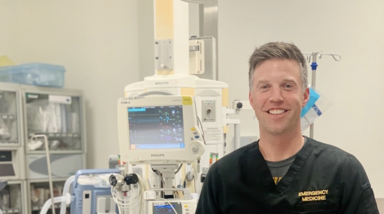
The project, titled “Characterizing a High-Reliability Implementation Program for Sepsis: Sepsis Tools AND Accurate Reporting of Outcome Differences (STANDARD) Study,” is led by Nicholas Mohr, professor, and Heather Reisinger, professor, from the Carver College of Medicine, and Brett Faine, clinical associate professor from the College of Pharmacy and Carver College of Medicine. The grant will allow the team to better understand what distinguishes hospitals that consistently perform well in treating sepsis from those that struggle. While timely treatment is a critical factor, leadership, teamwork, and system design also play essential roles in improving patient outcomes.
Sepsis occurs when the body’s response to infection causes widespread inflammation, which can lead to tissue damage, organ failure, and death. Despite advances in medical care, sepsis remains one of the leading causes of mortality in hospitals. While national guidelines exist for diagnosis and treatment, outcomes vary widely from one institution to another.
The STANDARD study seeks to close that gap by identifying which implementation strategies and institutional behaviors lead to sustained improvements. The researchers will evaluate hospitals across the country to determine how organizational culture, quality improvement programs, and feedback systems affect sepsis outcomes. They will then validate whether these characteristics directly correlate with lower mortality and better recovery rates.
The project bridges medicine and pharmacy in an important way as pharmacists are integral to sepsis management, from ensuring timely antibiotic delivery to adjusting doses for critically ill patients.
“We are excited to launch this new project which aims to identify performance improvement strategies that will help standardize sepsis performance improvement implementation, reducing hospital-to-hospital variation and ultimately improve survival,” said Faine.