

A team of University of Iowa (UI) researchers has received a Small Business Innovation Research funding award from the National Institutes of Health (NIH) for their startup company S5G Therapeutics Inc. The funding will support their goal of advancing an antioxidant-based technology that may lead to new eye drop treatments for dry eye disease, Fuchs endothelial corneal dystrophy (FECD) and other conditions involving oxidative stress.
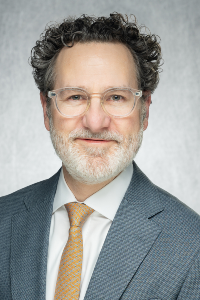
The company brings together Mark Greiner, professor of Ophthalmology and Visual Sciences, and fellow College of Pharmacy faculty member Aliasger Salem, Bighley chair and professor, and UI senior associate vice president for research. Also on the team are Jessica Skeie with the Iowa Lions Eye Bank; Christine Sindt, clinical professor of Ophthalmology and Visual Sciences; Greg Schmidt, also with the Iowa Lions Eye Bank; and College of Pharmacy alumnus Sanjib Saha, ’23 PhD, who works at AstraZeneca.
A Discovery in Donor Corneas
The story behind S5G stretches back years and began not with eye drops, but with donated corneal tissue.

Greiner's laboratory at the Iowa Lions Eye Bank had been studying why some donor corneas were more susceptible to damage than others. That work helped reveal the sensitivity of corneal endothelial cells, which line the inner surface of the cornea, to oxidative stress. Unlike many cells in the body, human corneal endothelial cells do not normally regenerate, so protecting the cells a person has is particularly important.
In 2016, Skeie’s team received a small grant to investigate whether adding antioxidants to cornea storage media could protect donor tissue during the period between donation and transplantation. They discovered that adding ubiquinol to the standard storage solution significantly protected cells against oxidative damage.
However, the antioxidant was difficult to formulate in liquid. Salem and colleagues at the College of Pharmacy stepped in. The team developed an aqueous delivery system that did not require ethanol and heat which the researchers initially used. The stable, soluble formulation opened possibilities well beyond donor tissue storage.
From the Eye Bank to the Patient's Eye
The next leap came from a conversation with Sindt, whose clinical work includes patients who wear contact lenses. She helped researchers recognize the potential for delivering the antioxidant directly to patients' eyes.
"We need to make this into drops," Skeie recalls Sindt saying.
Suddenly, a technology developed to protect donor tissue outside the body had the potential to protect corneal cells in patients.
That possibility ultimately helped spur the formation of S5G Therapeutics in 2021. The company is pursuing the use of intellectual property developed at the UI. Currently, Skeie said, S5G has an option agreement with the university while the team works to secure funding and complete pre-investigational new drug research. A future licensing agreement would allow the company to bring the technology to market under terms established with the university.
For the researchers, creating a company provides a mechanism to continue shepherding a discovery they have spent years developing rather than waiting for an outside organization to take an interest in the technology.
Treating More Than Symptoms
One of S5G's first potential markets is dry eye disease.
Current approaches to dry eye frequently focus on managing symptoms through artificial tears, gels, warm compresses, and other therapies. The Iowa team's approach is different. Because oxidative stress and inflammation can contribute to the disease process, the researchers hope an antioxidant therapy could intervene in that process rather than simply provide temporary relief.
"If you can fight the inflammation, by reducing the oxidative stress response, you can prevent these symptoms from being persistent," Skeie said. The goal, she added, is to reduce the burden of continually treating symptoms and ultimately improve patients' day-to-day quality of life.
Dry eye is only one potential application. The team's work may also prove valuable at multiple points along the spectrum of corneal care, including donor tissue, transplantation, dry eye and diseases such as FECD, an inherited disease in which oxidative damage contributes to the death of corneal endothelial cells, eventually leading to serious vision impairment or blindness.
In 2025, Salem and Greiner received a $2.85 million grant from the NIH to study ubiquinol as a potential therapy for FECD. They aim to determine whether eye drops made with the antioxidant can protect corneal cells from iron-induced damage and slow the progression of FECD. If successful, the treatment could offer patients a noninvasive alternative to surgery and help preserve their vision. The two are lead researchers on the study.
Building a Public-Private Partnership
The more than $313,000 NIH Small Business Innovation Research Award is helping the momentum continue.
An additional $50,000 in matching support is expected from BioConnect Iowa, an economic development program. The project will further help develop an FECD-specific delivery system designed to increase uptake of ubiquinol in endothelial cells.

This funding also creates a bridge between S5G and the university. Greiner and Salem are supporting the work on the UI side through a subcontract, while Skeie is splitting her time between the university and S5G during the six-month project.
Greiner sees that arrangement as an example of the role public-private partnerships can play in moving discoveries from academic research toward products that can benefit patients.
"This is a commercialization effort, and that’s more nimble on the private side," Greiner said.
The distinction matters because proving that a molecule works in a laboratory is far removed from producing a medicine. Before a therapy can reach patients, researchers must refine its formulation and delivery, conduct additional preclinical testing, navigate the regulatory process, manufacture it consistently, and eventually demonstrate its safety and effectiveness in clinical trials.
S5G gives the Iowa team a vehicle for taking on those next steps.
For some applications, such as dry eye, Skeie believes the startup may be able to move development forward itself. Other potential therapies, particularly those designed to deliver antioxidants to cells inside the eye, could ultimately require partnership with a larger pharmaceutical company capable of handling large-scale manufacturing and distribution.
Either way, the objective is the same: turn a discovery made in an Iowa laboratory into something patients can actually use.
For Greiner, that is what makes the creation of S5G significant. It isn't separate from the research taking place at the UI. It is a potential pathway for that research to make the final journey from discovery to treatment.
"This is public-private partnership at its finest," Greiner said.
And the project still traces back to the same question the team began asking years ago: How can we keep vulnerable corneal cells alive and healthy?
The answer first led them to donor corneas, then to ubiquinol, then to a soluble formulation and potential eye drops. With S5G Therapeutics, the team is now working on the next challenge: figuring out how to turn that science into a treatment that can be manufactured, distributed and, one day, placed into the hands of patients.